Graham Ellis - my blog
Devizes Gateway Station - would it work? Personal Wiltshire experience.
As a former resident in Easterton, we lived just a mile from the main line railway. We could walk across the footpaths and watch the express trains headed for London and the West Country - but they were useless to us for travel purposes.
Central London was reached by car to Andover of Basingstoke and train into Waterloo; Pewsey occasionally. I travelled a very great deal for work - drove 30,000 miles a year, never took the bus and hardly even the train. Much of the milage was for work and with heavy equipment that meant my vehicle had to be a people carrier - were there a requirement to travel with that weight and bulk these days, it would still be via a big car. Even in Central London.
We moved to Melksham at the tail end of 1999. And there, too, we have experience of a railway station where the service was so scarse and unreliabe that it was frankly useless, improving somewhat to what remains too thin to meet more than a small proportion of needs - it has moved up from 3,000 to 70,000 journeys a year where it should be 350,000 to 450,000. Half a million in coming years with the growth of the town.
So - I started today to write a comment on whether a new Devizes Gateway station at Lydeway would "work". I have written from my own expertience heart, head and feet having lived within a mile of that stretch of railway for 15 years.
Heart - the emotional desire for it to happen
Head - real thoughts as to what it might do and where the issued would be
Feet - actual travel experience living less than a mile from the line in question and what we did with no station
Times changed, and the need for heavy equipment reduced. Running IT courses, we moved from a Sun or Silicon Graphics workstation shared between two delegates, to a workstation for each delegate. They shrank into laptops, which became in time a fleet of A4 sized machines that could pack for travel into a paper box, alternating for passing between the training note sets that our delegates worked to. And towards the end of my training career, we had moved to a position where most delegates preferred to use their own laptops, and I carried only a limited number of our company machines which became "just in case" adjuncts and were rarely used.
Towards the end of my training career, I was "training" much more. After 15 years living in Easterton, we moved to Melksham; we purchased a listed building in uninhabitable condition on 11th August 1999, standing outside our new home as we watched the total eclipse, the rooks calling concerned at the unexpected nighttime, and we were both excited and wondering what we had done. And we moved in on 24th December - "must be in for Christmas", with the only room practical as our bedroom (safe floor) was on the third floor (fourth for any USA readers), and the only loo and leccy were on the ground floor, with a string of multiways. I digress.
From Melksham, standard station run was "Kiss and Ride" via Chippenham, second choice Westbury, third choice Trowbridge. And as there came to be less need for carrying beyond the capacity of what I could manage without a car, it became the preferred way to travel. Yes, I enjoyed open road driving but fighting jams all the way to Cambridge was not "Open Road" and it was tiring. As course tutor, the teacher had to be there for 08:30 or 09:30 depending on what time we started, and that was of critical importance. With Chippenham to London fares at peak times being high, and with our fixed expenses quotations, it was logical to travel up on a Sunday afternoon / evening, stay the night (easy to find somewhere cheap and cheerless near Paddington, even for London) and then be fresh to teach. In those early days in Melksham, never the station there. Too few trains, not at the right time, and nothing to fall back on if they failed. The 22:16 bus from Chippenham Station was an excellent way home at the end of the course - saving Lisa the drive out late at night, though on many trips it left before the 22:11 train arrived.
I used Melksham Station - err - when I could; from 2001 to 2006 there was a very thin service but it did work for inbound customers. Where just one person needed a course, they came to us and we would pick them up on the evening before and drop them off at their B&B. Courses finished in time for them to catch the 17:00 homewards. Come 2007, the 17:00 gone and a service at either 19:50 (or 07:20 the next morning) and it became pickups from Chippenham and lifts back there. Our customer base - even 20 years ago - tended to be [environmentally aware / green] and a surprising number - around a half - arrived and left by public transport.
By 2014 when our service stepped back up from useless to useable though still thin, we reverted to offering pickups / dropoffs almost-only at Melksham Station and it worked well, though by that time I was spending far more time on site training and far less time in our Melksham base. That was because we were ahead of the curve; our initially-niche topics like Perl, PHP MySQL and Python which no-one saw a training market for when we set up had become much more mainstream, and rather than our delegates being the one odd-bod at large organisations, the technology was being so useful that it was adopted by larger teams.
And so - having stepped the service back up - my own business use grew dramatically (bolstered by the need to carry less explained earlier) and the use by our trainee customers faded a little. In 2006, we had taken over a former B&B for delegates and our public courses had become largely residential; it worked for the delegates and it worked for us, but it gave us a resource that needed to pay its way or at least break even, and rooms that were only used be delegates for perhaps have the time weren't cost effective. And we were being asked "can we stay - we work at a business locally" and "My son and daughter-in-law live in Melksham and we're coming to visit them - but they have been breeding and don't have any spare rooms now". And so we were moved to accept more general hotel bookings. These customers were - if I characterise - less "public transport aware". It was rare for them to arrive in anything but a private car, or to go out anywhere other that in their own car or a taxi (and ah, there in another tangent I will avoid.
Business journeys WERE able to start from Melksham again, and did so. I reckon my travel miles didn't change much but my car driving miles slashed from 30,000 to 3,000 a year to far less than that now. And 27,000 miles at an average of 45 m.p.h. is 600 hours a year. Roads around Easterton, Devizes, Melksham are not renowned for high speed. I got to be very much part of The Archers' community, listening on my way home - and indeed had done so from perhaps 1980 when we moved to Chippenham to cover a sales territory described as the South West (Shrivenham to Penzance!). At current prices - £9 per gallon, and 30 miles per gallon - a thousand gallons a year, £9,000 on fuel alone. And that's before registration, insurance, serving including oils, tyres and parts, and depreciation. Tutor needs to turn up in a decent vehicle, so an old banger won't do; we did try a retired London Taxi as a "character" vehicle we could get away with, but it turned out to have been retired because it was knackered. Some wonderful stories to tell, but I got to know the AA man in Dublin very well, and it was exhausting to drive over long distances.
So since 2014, my use of Melksham Station has been much more personal business and much less by persons using my business - which in any case we retired just pre-covid. My very first outbound - at the end of the day the trial service of 8 trains each way per day started - was to Thun, via Harwich, Hoek van Holland and an Interrail pass - to teach Lua, would you believe? And other notable destinations have include not only those near stations (and a wide range, from Bow Brickhill to Farnborough Main, Kirkhill and Waterbeach) but on occasions by onward bus - no other way, these days, to Ashby-de-la-Zouch or St Asaph.
I started writing - oops - several hours ago - in giving follow up examples for the post about Devizes Gateway, potential traffic there, how it might be abstractive, whether it would be used, how it might effect the buses. I fear my example and experiences quoted, though we once live in what would be it's catchment, is a bit of an unusual one and whilst it may be taken as a learning and study case, it cannot be multiplied up to give a valid lesson. (post is here)
That post does mention buses. I have, so far, only done so tangentially in these ramblings. Would a Devizes Gateway station impact on bus use in the Devizes area? Now THERE is an interesting question!
Trains are typically medium distance and upwards uses. Buses are much more local? When we had a training centre and indeed a hotel I cannot recall any guests or delegates checking in after a bus journey to reach us. I can recall many hotel leisure guests asking us about Park and Ride for Bath which they wanted to visit while in the area, and the way they often needed to be convinced to leave their car on our drive and take the bus from outside - "no point in you driving to catch a bus when one goes direct from here!".
I contend that buses and trains are much more complementary than competitive - born out by evidence of where people go using each of the transport types. However, there is very much a need to link up and connect. There are 100 places you can board a bus in the Melksham area, and there is just one station platform. For this public transport to work well as an attractive total journey for people, connections need to work between the two modes physically (bus stops and railway platforms close by each other), time wise (routinely providing good and reliable connections throughout appropriately frequent service) and organised passenger friendly way (combined information and ticketing offered, without each having their own complex and daunting rule set, and a get-you-there guarantee and not a leave-you-stranded scenario if something goes wrong). Provide those criteria are met then, yes, there's every best chance of Devizes Gateway, and a new township around it, being a roaring success.
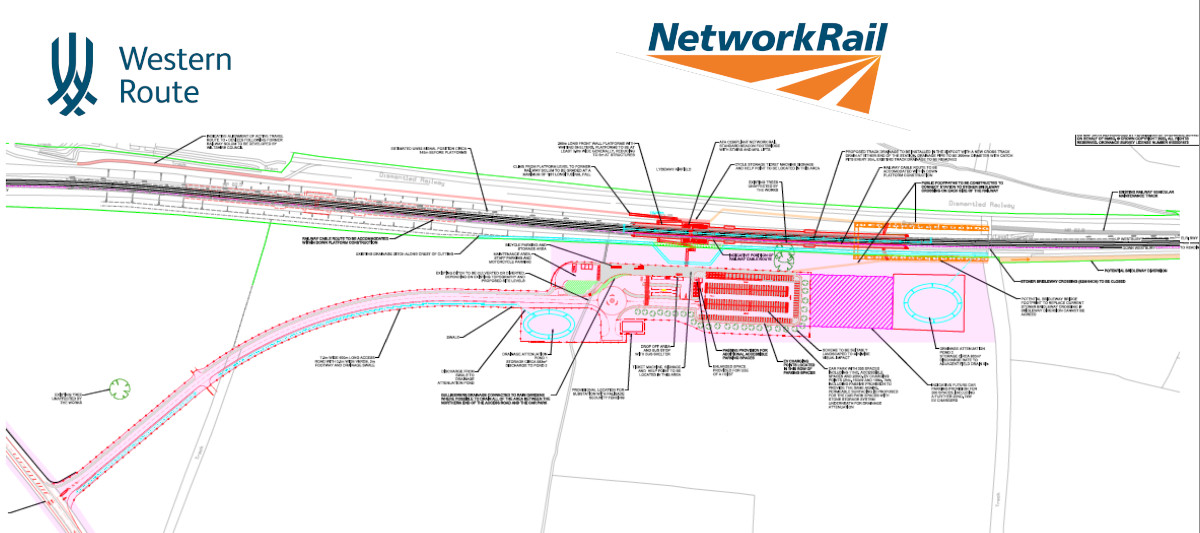
The Network Rail feasbility strudy from "Restore your railway" from which the top image is taken is mirrored at https://www.firstgreatwestern.info/mirror/Devizes-Gateway-Interim-Feasibility-Study.pdf. Note that a lot can change in 3 years - although the project needs to look forward 40 years plus!
Melksham Public Transport - as at Autumn 2026
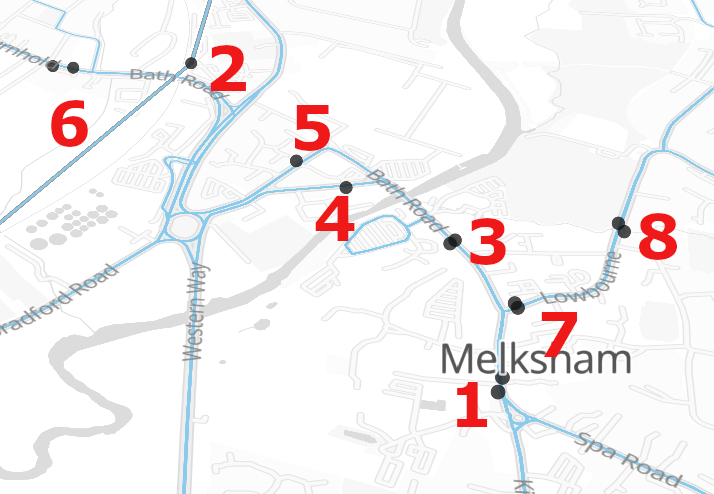
We have a web of public transport to and from Melksham.
Here is an updated introduction / list current as at September 2026 and unlikely to see any big changes soon. The map show the Town Centre and nearby bus stops and station, and there's a list of what calls where down the post.
Links to sections
* Main corridors
* Town bus
* Other routes
* Travelling further
* Some extra notes
* Where can I catch my bus or train - Melksham centre services
* Contact and tracking information
The main corridors
Buses run on routes 271, 272 and 273 into Bath. Combined they are about every half hour (Monday to Saturday daytime), every hour (Sunday daytime) and a little less frequent in the evenings, with no service Sunday evening.
Routes 272 and 273 run on to Devizes. Every hour during the day (7 days a week) and less frequent in the evenings, with no buses on Sunday evening.
The x34 runs 7 days a week, daytime, to Chippenham. About every half hour on Monday to Friday, every hour on Saturday and every hour or 90 minutes on Sunday. No evening service
The x34 also runs 7 days a week to Trowbridge, extended on Monday to Saturday to Frome. About every half hour on Monday to Friday, every hour on Saturday and every hour or 90 minutes on Sunday. No evening service
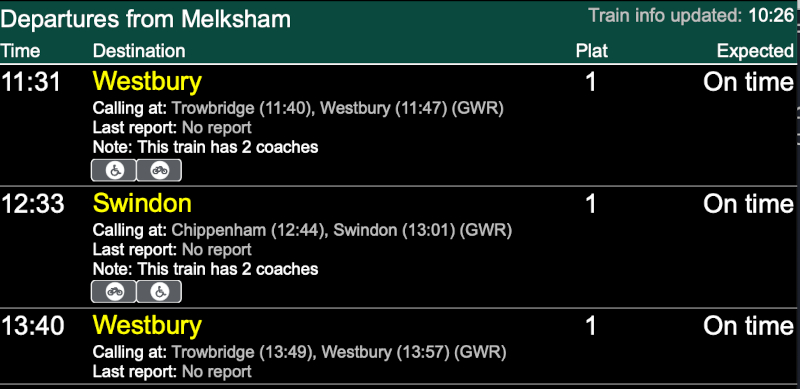
Trains run from Melksham Station 9 times a day (7 on Saturday and Sunday) to Chippenham and Swindon, and 9 times a day (7 on Saturday and Sunday) to Trowbridge and Westbury. Service are spread out from early in the morning through to mid-to-late evening.
Buses are run by Faresaver Ltd of Chippenham, and trains by Great Western Railway who are a First group company until December 12th, when they are nationalised. You can buy tickets for all these services on the day, from the bus driver of from the ticket machine at the station.
Link to top
Town Bus
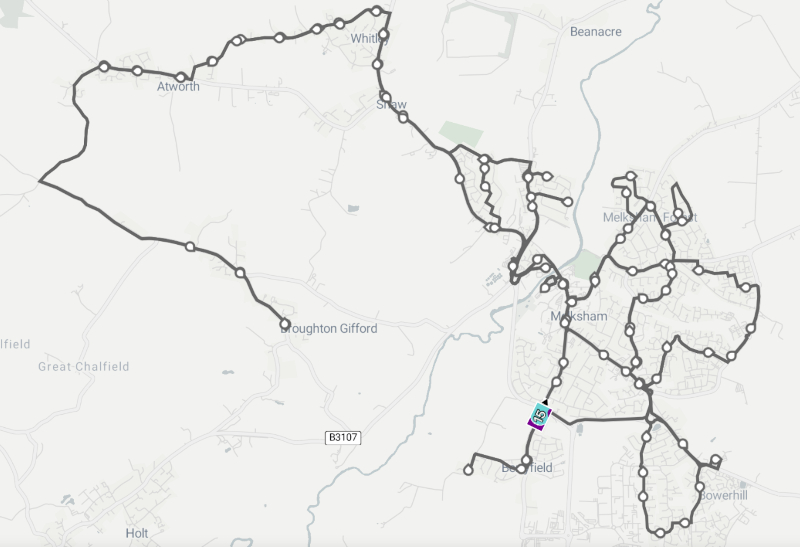
The bus 14 and 15 (run by Frome Bus) runs about a dozen journeys a day - Monday to Saturday, daytime. It feels that every run has a slightly different route (actually there are nine variations) as a single vehicle at present struggles to sever everywhere, and goes close to many people's homes in areas where less mobile people live. At school times, the journeys go close to / from Melksham Oak for pupils.
Link to top
Other routes
The 69 (occasionally the 68 or 68A) runs from Corsham to Melksham then on via Holt to Bradford on Avon (the 69) and to Trowbridge. 4 or 5 times a day, Monday to Saturday only.
The 401 National Express coach runs daily from the centre of Melksham to Swindon, Heathrow Airport and Central London and return each evening.
The x76 runs Monday to Friday, arrives from Marlborough and Calne mid morning and continues to Bath and on to the Royal United Hospital, returning mid afternoon and continuing to Calne and Marlborough.
The 555 is a school bus to Corsham that does accept fare paying passenger if convenient to you. Once a day during term time, and NOT included in the fare cap scheme.
The x69 runs Monday to Friday evening to Frome via Bradford-on-Avon.
The SB2 runs into Melksham from Seend on a Tuesday morning and return there at lunch time.
The 39 runs from Mallory Place (Bowerhill) to Devizes on a Thursday morning for the market there, and return at lunch time, continuimng to Bradford on Avon. It is the only bus listed here which does not call anywhere in the Town Centre, but rather uses the bypass.
Timetables for all these services are shown in the Melksham Transport User Group timetable, available from the TIC and the Library, and also from the offices of Melksham Town Council and Melksham Without Parish Council. Also online at https://www.mtug.org.uk/mrug_ttbook_202605.pdf but please note this is publication printed twice a year, and there are (usually) minor updates to services between times.
Link to top
Travelling further?
* For Calne, if the daily bus is not convenient, take the x34 to Chippenham and change at the bus station onto the 55
* For London, if the daily coach is not convenient or is too slow, take any Swindon train and change there for London (Paddington)
* For Bristol, take any train and change at Trowbridge or at Chippenham - that gives you 18 options a day (14 at the weekend). When returning, enquire of the barrier staff at Bristol or look at the printed "A to Z" there to determine which train you should catch for the best connection. Once road works are complete in Manvers Street in Bath and the 271/2/3 buses serve the station there again, a bus to Bath and then the train will be a good alternative.
* For Warminster, Salisbury, Southampton and Portsmouth, take the train to Westbury and usually change there. Occasional trains run on through to Salisbury or Southampton.
* Taking visitors to Stonehenge, take the 272 to Devizes and change to the X2 (Monday to Saturday only)
* Taking visitors to Avebury, take the 272 to Devizes and change to the 49 (Daily)
* Taking visitors to Lacock, take the x34 Chippenham bus
Link to top
Some extra notes
* If you live in or near the centre of the town, almost all buses serve the Market Place, The Bear and Old or New Broughton Road, just over the river in the north of the town. With the exception of the National Express coach, all services make additional calls as they pass through the outer areas of the town. In particular, the 271, 272 and 273 divert to serve Bowerhill and the 271 and 273 additionally divert to serve Melksham Forest, Queensway and Whitley
* Buses do NOT serve the railway station, which is an accesible walk of just under 10 minutes from the Town Bridge. Bus stops on most routes are a little nearer to the station, but times are not planned for connections. There is a free pick up and drop off area at the station, paid parking, and covered cycle parking.
* Almost all bus routes have variations on some journeys in order to address work / school traffic needs, and some peak hour journeys are timed a little slower than off peak to allow for traffic congestion, which means that although they are :xx minutes after the hour during the day, you need to check ahead for peak journeys
* Customer information is available online on the bus and train operator web sites, and there are dynamic departure boards at the Market Place, The King’s Arms, Mitchell Drive (Bowerhill) and the Railway Station. The MyTrip App tracks Faresaver buses for you, and live train tracking is available too.
* Bus drivers and train managers are of a very high customer service standard and are very good if you require help or have a brief question.
* There are no bus or rail customer service staff based in the Melksham area, but there is the TIC and the Town Hall and Library in town where you can get local advise, as well as online and phone sources. There is a help point at the station that will connect you with a central enquiry point.
* The Melksham Transport User Group is planning to open “Information at the Station” in the current financial year – offering what it says on the tin (bus and train information) as well as loos and a limited range of drinks and snacks and volunteer advise. Watch Social Media and Melksham News space in early October.
Link to top
Where can I catch my bus or train - Melksham Centre services (*)
1. The Market Place or the King's Arms (across the road) (These stops have real time tracking)
All bus and coach services EXCEPT the 271 to Bowerhill, the 14 Town Bus and the x76 to Calne and Marlborough
2. The Railway Station (Has real time tracking)
All trains
(Bus stops 4, 5, 6 are officially recommended for interchange but none is AT the station)
3. The Bear or opposite the Bear on Bath Road
All buses, but not the National Express coaches
4. New Broughton Road
271,272,273,x76 to Bath
x34 to Chippenham
68, 68a, 69, x69 via Holt
69 to Corsham
14 Town Bus to north Melksham
5. Old Broughton Road
271,272,273 to Bowerhill and Devizes
x34 to Trowbridge and Frome
14 Town Bus to Melksham Forest and East Melksham
x76 to Calne and Marlborough
6. Bath Road / Blenheim House and Victoria Motors
271, 272, 273, x76 to Bath
271, 272, 273 to Bowerhill and Devizes
x76 to Calne and Marlborough
7. Buds Bar / Lowborne and opposite and
8. Lowborne / KGV park
14 to Melksham Forest and Queensway
271 and 273 to Melksham Forest, Queensway and Devizes
273 to Bath
x76 to Calne and Marlborough
(*) - service 39 calls only at Mallory Place, Bowerhill and not the Town Centre
Link to top
Contact and tracking information
Faresaver (most buses to other towns)
Main website: https://faresaver.co.uk
Live tracking: https://mytrip.today
Phone number: 01249 44 44 44
Great Western Railway (all trains)
Main website: https://www.gwr.com
Live tracking: Live tracking: https://tiger.worldline.global/MELKSHM/cisds;graphic=1
Phone number: 03457 000125
Fromebus (town buses)
Main website: https://www.fromebus.co.uk
Live tracking: Live tracking: https://bustimes.org/services/14-melksham-metro#map
Phone number: 01373 471474
Link to top

Published Wednesday, 23rd September 2026
21 years of 'Save the Train'. What about the next 21?
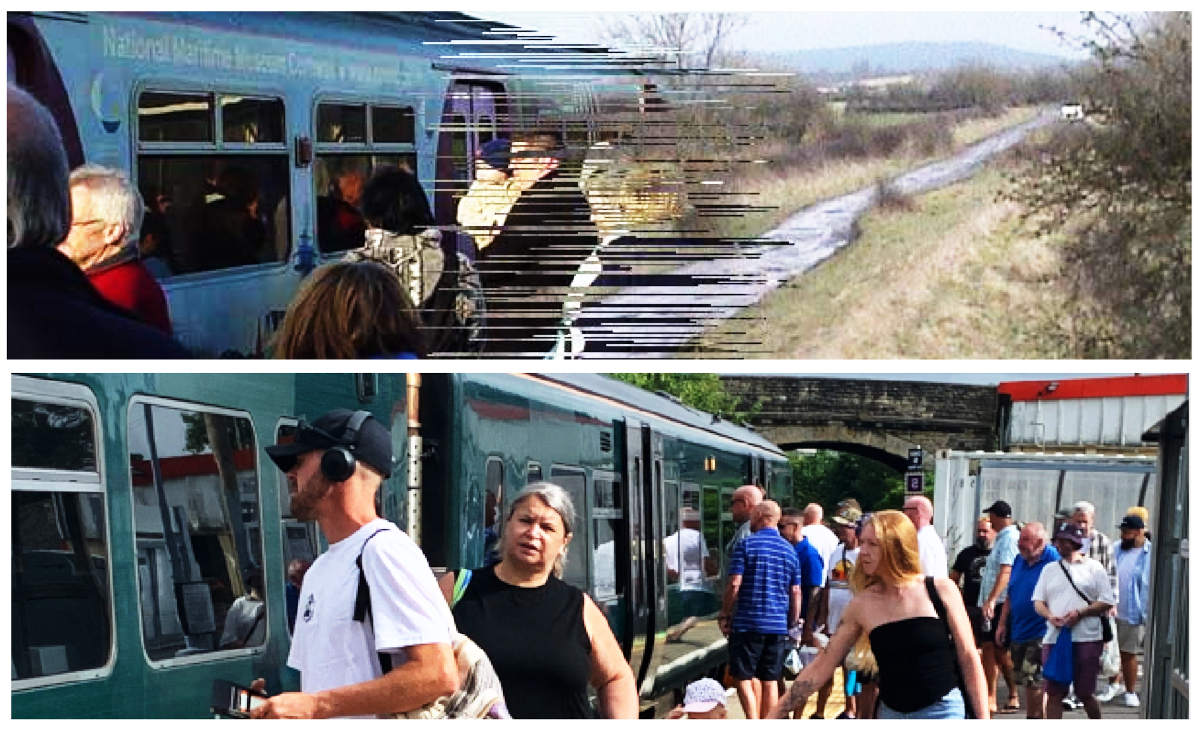 21 years ago today, we held the inaugural meeting of "Save the Train" in answer to the threat - which was implemented because we were too late, to reduce Melksham's train service down to just 2 per day each way. It took us years, but today we can celebrate the steps we have taken towards an APPROPRIATE service. That word "appropriate" carefully selected to bring in a wide support base.
Where are we now, 21 years later? Melksham's train service is back up from 2 to 9 each way per day. Some success, then, but still work in progress. Passenger journeys to or from up from 3,000 a year to 75,000 per year. But look at other west Wiltshire town stations, and our numbers should be 400,000 on a service of perhaps 24 trains per day. That's a half hourly service most of the day, and with each of the trains picking up / dropping off twice the number of passengers that the current trains do.
I was at Chippenham Station yesterday to catch the train that should have got me to Melksham at 15:39. But it was cancelled, and the next train would not have arrived until 18:00. The stations staff, with a bit of persuasion, provided a taxi because the wait would have been so long; I am robust but it shows up the problems that need to be addressed of a none-robust and infrequent service. Nine trains each way per day was an appropriate trial a decade ago and the trial helps us look forward; 9 trains a day is no longer appropriate and we have more work to do.
I remember speaking on the "Today" program on Radio 4 in the early days, with rail minister Derek Twigg answering. "We can't run a service just for Mr Ellis" he said. I agreed - it wasn't just for me, it was for our whole community, and although it was laughed off at that time, it happened. I was just in the right place at the right time to help point out the common sense versus the official status quo. We are in that same situation today with the step up from 9 to dozens of trains. Chatting with one of the blokes at Chippenham Station yesterday, I mention that I would not have needed a taxi if the train ran every have hour. "That will never happen" he said, but I would not be so sure. Let's Learn from the past, but looking forward to the future - speculate
Trains from Swindon calling at Chippenham at 06:20 and every hour to 23:20, and then Lacock, Melksham, Holt, Trowbridge, Westbury and stations to Weymouth with cross-platform connections at Westbury into and from Bristol to London via Salisbury trains. Plus trains from Chippenham at 06:50, hourly to 10:50, 14:50 and hourly to 18:50, calling at Lacock, Melksham, Holt, Bradford-on-Avon, Avoncliff, Freshford, Limpley Stoke (?), Bathampton, Bath Spa and stations to and perhaps beyond Bristol Temple Meads.
Why the extra stations on our line? Because we are looking forward. It was around 15 years ago I was asked by Holt parish council about the possibility of opening a station there, and my answer was "I'm sure that could be done if you filled the fields between the village and the railway with public transport using houses". A la Cranbrook or Copplestone. But they didn't like the idea and as far as I know it went no further. Except ... I now read of planning that looks to build on at least some of those fields and the question arises "how will the existing infrastructure and services cope" and the answer is "they can't".
The railway line near Lacock is away from the tourist village. The road crosses the railway at an appropriate location. One quadrant is what we call "affordable houses" these days, a second quadrant is dominated by a factory, and the final two quadrants are farmland one of which, however, has been disturbed in recent years by underground cabling and is hardly prime agriculture. There's a short straight run to A350, and across it the tourist "honey pot" of old Lacock which would be left undirturbed. And you have Lackham college that would also be served
"Save the Train" was set up (it's in the name) for rail services. But over the years the Melksham Railway Development Group which pre-existed and was so supportive has changed - based on the changes we have seen and encouraged - into the Melksham Transport Users Group. It's about all public transport, and we now have users to support. And just as the trains have changed over the years and much for the better, so have the buses. Much work remains to be done there too, and with seamless connections between them.
Illustration - our old "Save the Train" banner and showing a busy day but also the risk of the service being lost, and a picture from a typical day this (2026) summer.
Published Sunday, 20th September 2026
Great Bristish Railways and what might it mean locally?
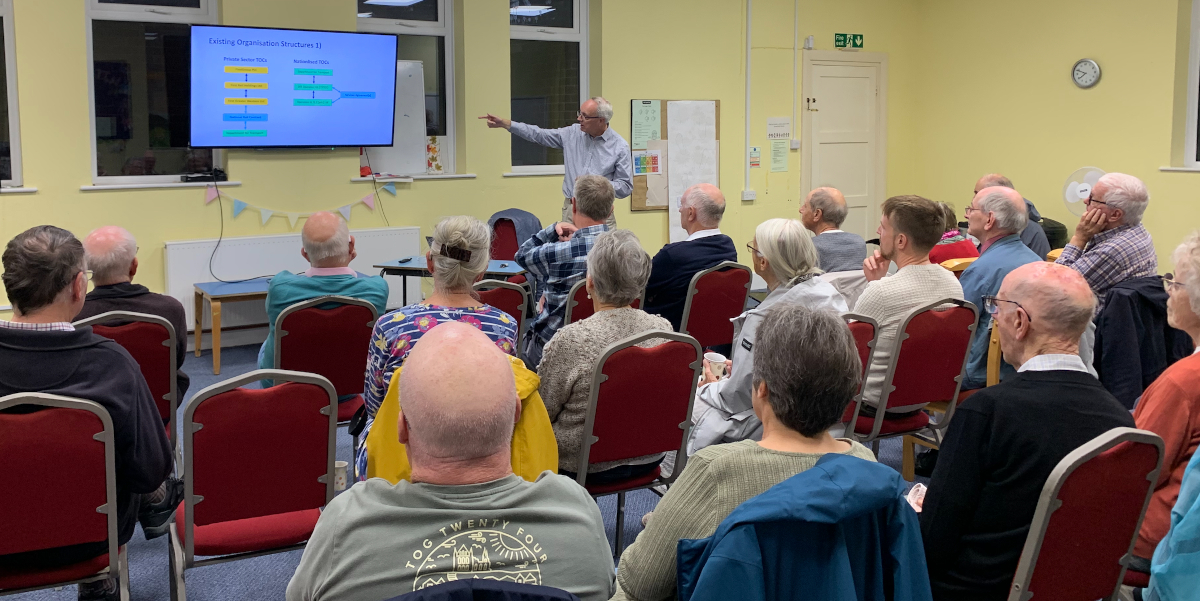 Wednesday 16th September 2026 - West Wiltshire Rail User Group addressed by Peter West OBE who worked for the railways until his "retirement" a coupls ot years ago, and who for two decades was the Department for Transport's lead civil servant on the Great Western Franchise.
 Peter and I have known each other for around 20 years, often taking different views and resulting is different outcomes, but both with a love of the railway and a need to take it forward for the future. I wrote "retirement" in quotes as Peter is now a director of the Severnside Community Rail Partnership - as I understand it that's a voluntary role - and also retains very much a professional interest; we have met several times as we share that mutual interest.
Peter's talk slides - excellent and looking nationwide - are shared (here) ... but then how does that translate to locally / our region?
Six current campaigns/issues came up as we were speaking - not specific in the notes or shared as such, but certainly with a large number of people around and very much in listening mode, so not really confidences. There is a theme about learning from the past but looking to the future - I have mentioned this elsewhere beyond "Frequent Posters"
1. Somerton. A reminder that a request to reopen and restart the service here gives a signal of looking back not forward; Peter commented that the old service was about 5 trains each way per day - far too thin for future requirements. Further, most of the services were local, going no further than Westbury and that would be highly unlikely to be the major flow at a new station in Somerton/Langport, nor would it combine the flows like the old service did from other smaller (long gone) stations.
2. Corsham. Peter was of the view that the removal of the Bristol -> Oxford service, just before the became the DfT» 'person' for the (F)GW(R) area, was a mistake driven by a DfT desire to improve performance stats as it was just about the least reliable service coming into the Greater Western franchise. I got the impression that the removal was NOT spearheaded by First, who had just taken over Thames Trains and were removing a vanquished competitor on the Bristol -> Didcot section. We all know (discussed) how Wiltshire Council had invested heavily into works for a new station, and were really upset at how that investment was lost, and how that has made them wary of rail investment for the 20 years since.
3. The Corsham experience is a warning flag for other overlap areas between the (new) GBR▸ and other national operators such as TfL» and TfW▸ and how they - TfL in particular - are not thrilled with potential unplanned flexibility in their agreements to operate over GBR tracks and are looking to tie down contracts very tight to insure that their trains can run in appropriate ways. The view expressed was that this might be OK short term, but is likely to stifle medium and long term development.
4. "The Waterloos" - request for Bristol -Bath - Bradford-on-Avon - Trowbridge - Clapham Junction - Waterloo through service. The new GBR will have operating divisions and they are expected to be laid out very much as the diagram in Peter's presentation - at least in the South. And that gives us back - again - a "Southern Railway/Great Western Railway" or "Southern Region/Western Region" or "SW[TR]/[F]GW[R]" setup. And although both divisions will be part of the GBR parent, co-operation between them may be far more limited than we wish. Not a comment from Peter - my thought - that the interfaces over the years have not been kind to the overlap areas between the companies / divisions.
5. Melksham. Peter described the setup prior to 2005 as "a set of 5 random trains per day"; I don't totally agree / given the number of trains the timings were not *that* bad. However, the current service (up from 2 to 9) is seen as being thin but not random in the same way. I suggested that the rise from 3,000 to 75,000 journeys per annum from Melksham was only a step and in future years we should be looking towards 350,000 which would require a "metro" frequency, and Peter did not disagree. We travelled back from Trowbridge to Melksham after the meeting with a former mayor and former deputy mayor of Melksham; a dozen joined the train at Trowbridge and perhaps 6 to 10 left at Melksham (I was queueing to get off - no count). Noting a) that the meeting had been very informative to the much more generalist local notaries and b) that the train, though thinly used, was expected to be much busier as it left Swindon on the return and c) passengers - such as Peter - headed beyond Swindon and so the economics of the service are not just the local line economics but go rather beyond.
6. WECA border turn back. A discussion on mayoral and regional boundaries, and how there was a though / question from WECA about turning back the services they were adding / supporting at the boundary of their authority, but how common sense has rather prevailed, and how services are running beyond not only to the benefit of the mayoral authorities (bringing in people from the wider travel-to-work area) but also those other areas. A word of caution - that similar needs to work in future, and across between areas of different views and political complexion where the political scene changes perhaps multiple times within the planning and implementation times of the railway.
Published Saturday, 19th September 2026
Strategic Wiltshire Freight Policy / Consultation - Melksham view
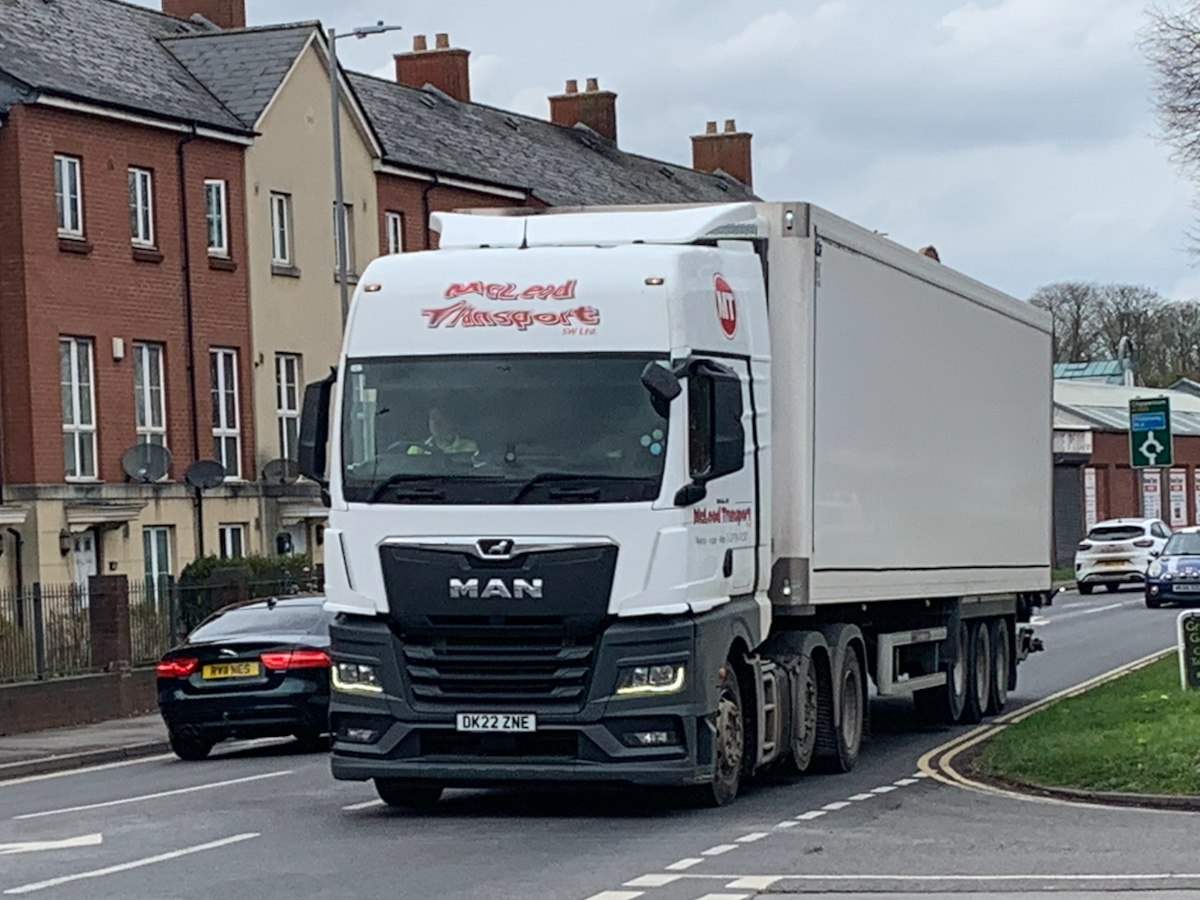
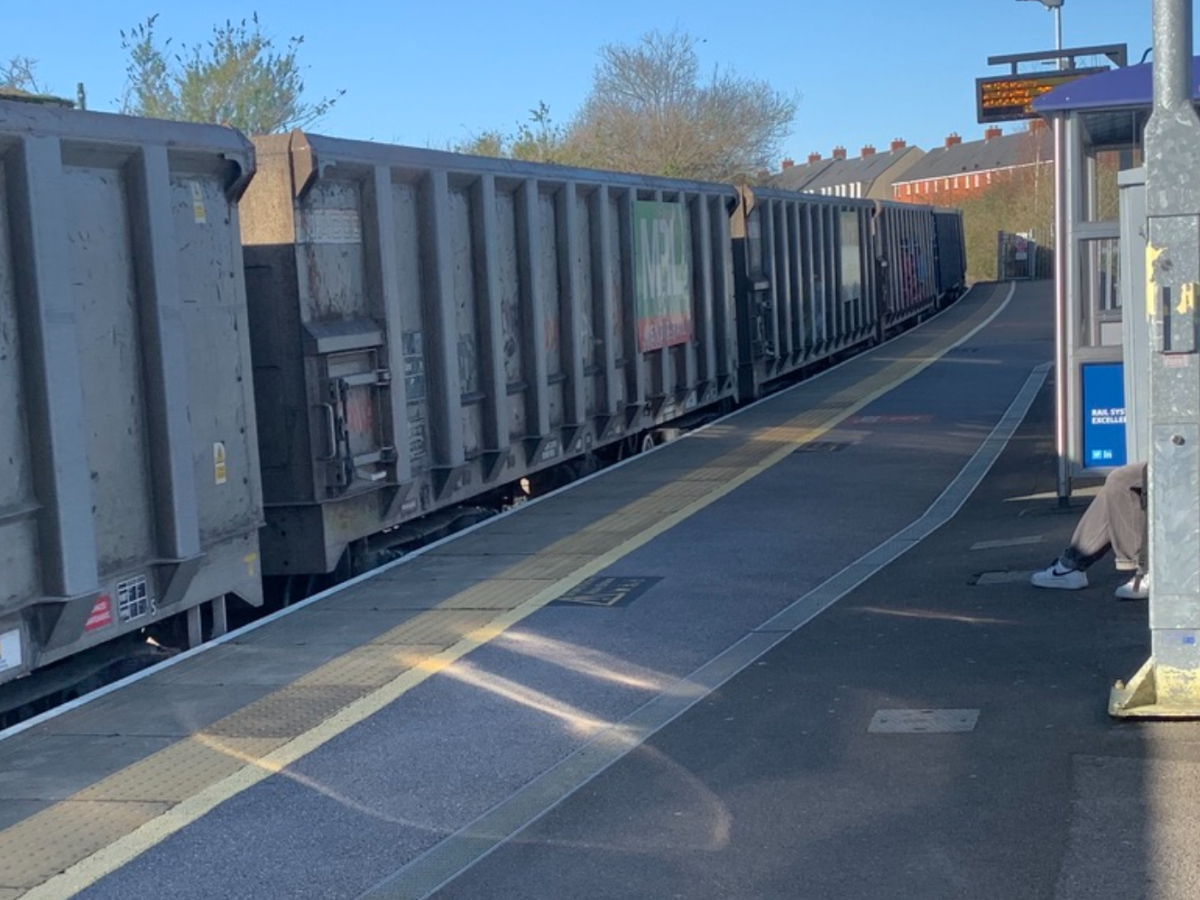 My notes for and after Melksham Town Council Planning Committee on 15th September. I asked (in public questions) addressing item 9 on the agenda:
"" Melksham lies in the middle of England and on the only designated trunk road and rail links for freight through Wessex from the Solent and BCP (Bournemouth, Christchurch and Poole). These links also provide the trunk freight corridors from Trowbridge, Warminster and Westbury to the M4 and northward (road) and from the Somerset Stone quarries to the Heart of England (rail).
"" Will the Town Council's Planning Committee please make an input to this consultation, which closes on 23rd September, acknowledging these links and requesting that the freight action plan provides strategic support for significant infrastructure improvements on both the rail and road corridors to not only handle the projected increased freight traffic in an environmentally friendly way, but also handles projected passenger traffic which shared the infrastructure? ""
The discussions lasted the best part of half an hour on this (delighted - a longer term topic but being taken very seriously). There was general agreement that with the growth in housing that is expected in Warminster / Westbury / Trowbridge / Melksham and passenger and freight traffic looking to move up and down to the M4 corridor and north beyond, road (and rail) needs to be updated to cope. And that it makes sense to ensure that facilities to cope with long and short distance freight, and long and short distance passenger traffic, be considered for a joint solution. And "do nothing" is not a solution.
Some more base data
One councillor (who's ward actually includes Melksham Station) suggested that freight traffic on the road was the problem, with rail freight just being a "nice to add" optional extra; certainly, road congestion and traffic is far more noticed and mentioned in Melksham. In order to check his assertions, I did some follow up research and it came up with some surprising results.
On traffic levels: The A350 is said to carry around 3,000 lorries per day each with a maximum kerb weight of 44 tons (let's call that 30 tons load). The railway line carries around 12 freight trains a day with a maximum load weight of 4,000 tons. So those figures are 90,000 tons by road and 48,000 tons by rail. We notice the road traffic because it comes though Beanacre and North Melksham in many smaller containers ("lorries") but we don't notice the rail traffic because it comes through in a very few trains. In practise, there is a lot of empty ("returns") working, and many trains and lorries are sizes and loaded below the maximum weights.
On improvement costs: The budget for a Melksham bypass would be around £350 million at current rates, and a dynamic loop on the railway would come in at circa £60 million. For the wider area, you're looking at perhaps a similar cost to improve the road from Yarnbook through to Frome Market on the A36, and you would be looking at perhaps another £40 million for an extra platform track as Westbury and perhaps a waiting loop at Staverton / Bradford Junction. Big sums all, but yet better value for ton turns out to be rail.
It strikes me that the emphasis put on road in the meeting highlights the severe intrusion of the lorries in Beanacre and Melksham's North Ward, whereas the trains pass through almost unnoticed, so councillors looking for future support and votes from their electorate may concentrate on road solutions even though they are more expensive and less efficient per heavy haul ton.
Conclusion
The conclusion reached by the committee was a unanimous vote to delegate the drafting and submission of the response to the officers, supporting the need for major improvements in both road (i.e. bypass on new alignment) and rail (i.e. at one loop and perhaps more on existing alignment). The whole response be tuned to, but not to copy, the thorough work already done to be used as an informing base.
Further commentary and options
The question should be asked "do we really need both". Sadly, the answer is "yes". Both are at or approaching saturation point, already acting as tourniquets on goods, and passengers through (and to and from) Melksham to the detriment of the quality of life, economy and environment of our area and stretching way beyond. The two traffics are different and not easily or effectively switchable between modes. And growth over the next 10 to 40 years is predicted to be such that the tourniquet throttling our area would only get worse if nothing is done.
Why the route through Melksham? Because on both road and rail it is the only sensible and available trunk route on a north-south axis for a long distance. And it's already there in many parts and within the existing strategy. Rail improvements especially can allow substantial freight and passenger traffic increases within the current "rail land" curtilage ans with little disturbance. This makes sense and is in line with government policy at a high NPPF level. The road improvements ("Melksham Bypass") at a local level are more expensive and more problematic in terms of new land taken, but I am moved to share the opinion that a change that will relieve future pressure is necessary.
On rail, I'll go more specific here because in many ways it's an area I have more background and it's the hidden dragon which can be developed and tamed far quick, cheap and nonintrusive improvement than the road changes. It is worth adding to the project - at least passive infrastructure provision - for
(a) at least one further loop,
(b) bringing disused platforms at both Westbury and Chippenham back into use,
(c) completing triangles at both Thingley and Bradford Junction using the line of routes which were in use until 1946/1990,
(d) extra stations where substantial housing close to the railway may be built and
(e) electrification so that power production is moved away from mobile, on-train, fossil fuelled provision which is inefficient, restricts performance envelopes, is not environment friendly and leads to high wear and tare, cleaning and maintenance costs,
(f) Passenger road / rail networking to enable passengers to make their first / final "mile" as efficient as practical.
I am not advocating for general freight handling at stations on the Melksham Area, but I do commend the whole aspect of provision of space on existing railway land for a freight hub there; smaller local provision is best handled by road where we have a much wider network, with some concentration for long distance higher volume and weight goods.
Published Friday, 18th September 2026
Public participation question for Melksham Town Council / Planning Committee / 15th September 2026
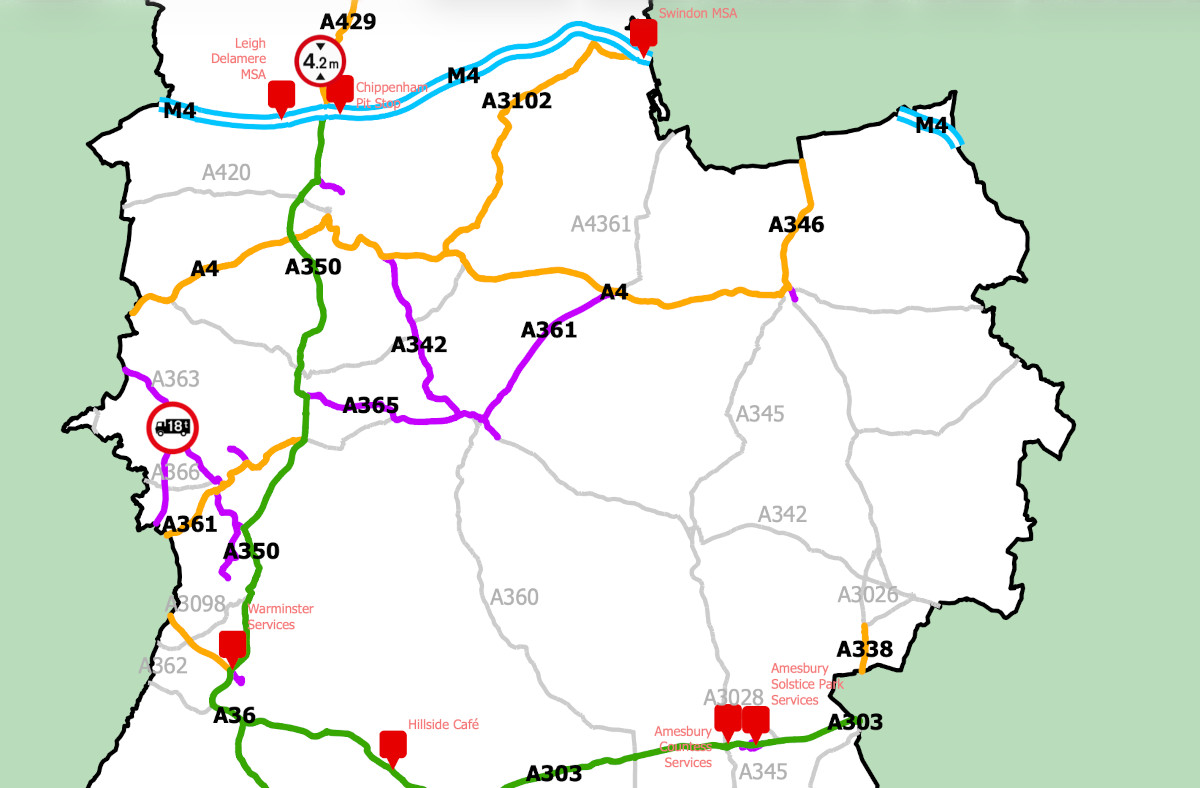 On Agenda item 9 - "To consider a response to Wiltshire Council’s Freight Action Plan consultation (deadline 23 September 2026)"
Melksham lies in the middle of England and on the only designated trunk road and rail links for freight through Wessex from the Solent and BCP (Bournemouth, Christchurch and Poole). These links also provide the trunk freight corridors from Trowbridge, Warminster and Westbury to the M4 and northward (road) and from the Somerset Stone quarries to the Heart of England (rail).
Will the Town Council's Planning Committee please make an input to this consultation, which closes on 23rd September, acknowledging these links and requesting that the freight action plan provides strategic support for significant infrastructure improvements on both the rail and road corridors to not only handle the projected increased freight traffic in an environmentally friendly way, but also handles projected passenger traffic which shares the infrastructure?
On the map accomanying this article, from the consultation (Appendix A) - "Wiltshire HGV Route Network"
Green - Strategic Routes
Yellow - County Roads
Purple - Local Access
Grey - not in the HGV route network
You may like to note in meeting preparation
a) This consultation input is due before the next full council meeting, and separate to local plan input which has a later cut off date
b) Written Statement on rail freight by the Secretary of State for Transport on 8th September 2026 which brings forward some targets https://www.gov.uk/government/speeches/rail-freight-growth-2040-target
c) Road corridors mapped out no longer show the A36 to Bath (for A46 and Bristol connections) to be trunk
d) Projected routing for a new Melksham bypass routes traffic away from Melksham Town Parish, although it remains in the Melksham Community Area
e) Network Rail, LTP4, Bath and Wiltshire Metro all call for infrastructure improvements to substantially increase rail capacity, and Network Rail and HMG plans call for phasing out of diesel-only trains, which account for all freight and regular passenger services through Melksham at present. The section from Chippenham to Trowbridge is already a bottleneck even at current traffic levels (last Thursday night - queues of trains waiting to get through, for example)
f) Written early on 10th September to give maximum notice of question. I will be visiting the local plan road show in Devizes today (why is it not coming to Melksham?) and may follow up on that, and happy to provide links / references is needed prior to next Tuesday
To: CEO, MTC as notice of question. Courtesy copy to Saffi Rabey as Committee Chair. Please feel free to share.
Graham Ellis
48 Spa Road, Melksham, SN12 7NY
graham@sn12.net
07974 925928 or 01225 708225
My emailling policy: https://grahamellis.uk/email
Published Thursday, 10th September 2026
20 years ago - last TransWilts commuter train. Progress since.
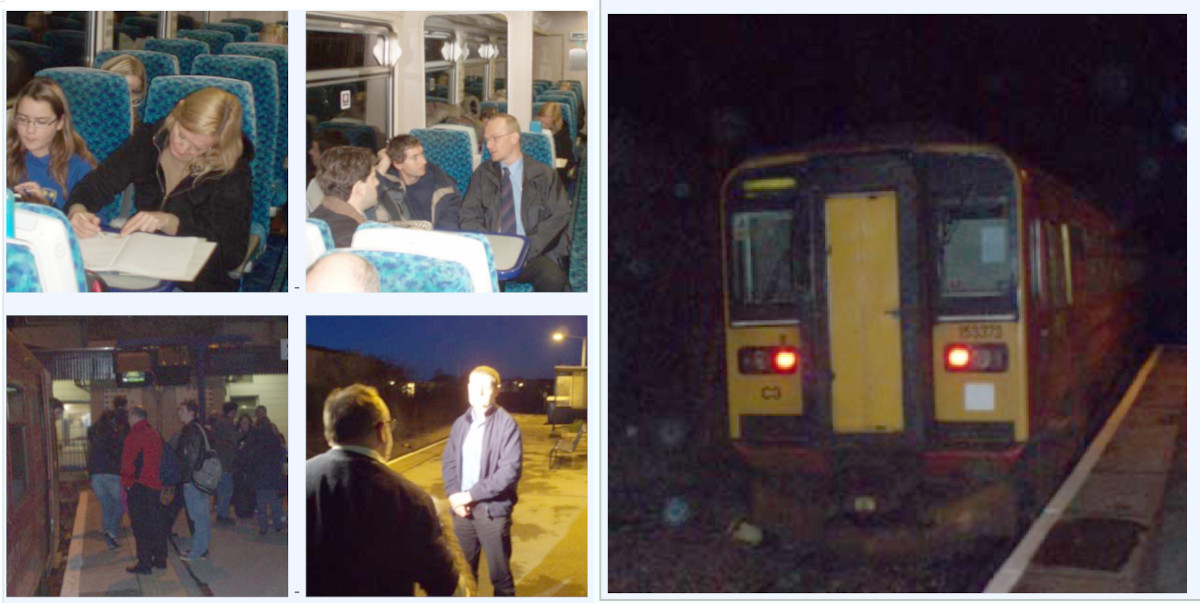 Twenty years ago today, 9th September 2006, Melksham lost its commuter train service from Swindon - leaving us with just two trains each way per day at times that a train could be spared off what were deemed "more important lines", and were pretty useless (frankly) here. What has followed?
 It took seven years to get a trial service back by adding a single (one carriage) train shuttling up and down every 2 or 3 hours. That succeeded beyond target and was made permanent 3 years later, but passenger numbers stopped growing in part because the train was overcrowded to the extent that more people physically couldn't get on the (only) peak service. The train is now two or three times as long, the platform at Melksham Station has been extended, and passenger journeys are 25 times what they were, but that is still just a tenth of the numbers they should be and are seen at other stations in the area - Bradford-on-Avon, Chippenham and Trowbridge.
We can characterise it that we have moved from a useless service after 9th September 2006 to a sparse service with significant issues, but useable in many cases, as at 9th September 2026.
Outstanding issues are ...
1. Train reliability. 90% of trains run but on an infrequent service we really need 98% plus
2. Train frequency. We need a minimum of one train each way per hour and (really) two
3. Unfriendliness to new users of station and information and ticketing systems
We have moved forward - those issues are nothing like as dire as they were in 2007, and they are generally acknowledged, appreciated, and projected to be addressed in upcoming strategies. And they need to be. With population growth, the Melksham area is no longer just a little market town of around 12,000 which it was in 1966 when the station was originally closed under the Beeching Axe. These days, it's around 29,000 and under Government and a new local plan, we might anticipate that the population of the contiguous urban area may be between 40,000 and 45,000 on 9th September 2036. Whilst individual personal mobility needs may have shrunk a little, both road and rail capacities are "squeaking at the seams" and major attention needs to be given - not only to the acknowledged ideas but, NOW, to starting real actions to address them.
1. Train reliability is being addressed - and yet we have been told it "is being addressed" for the last 20 years and it remains stubbornly high. The "need" for a private company like First to make a profit and employ resources (staff and trains) as possible, and to move those resources to other more lucrative lines when there's a shortage is admitted. Come December, the operation is nationalised. The workforce will remain the same - excellent staff on the line and at stations when they are available (can't praise them enough) but a management that must have a question mark over it as to whether, having had 20 years to fix the reliability, it can do so with government rather than private equity direction. We will have to see and work with them to at least ensure it's at least stable - and to improve the customer experience when something goes wrong.
2. Train frequency needs enhanced infrastructure. The line was reduced to a single track from the junction near Chippenham ("Thingley") to the junction near Trowbridge ("Bradford") in 1967, with no signals in between so that trains ca't follow behind each other, and with no places for trains to pass each other or wait for a "slot" if the line is not available. With a single line, realistically, you can run one train each way every 40 minutes. If the line were double and signalled for the purpose, a headway of 8 minutes would be well within grasp. As a knock-on, that's going to require capacity at Westbury, Swindon and places between to be able to handle the extra trains, and/or re-instatement of triangle junctions at Bradford and Thingley to let some trains run to and from Bath and Bristol - which will bring up other capacity issues at those stations. Huge extra topic here - freight through Melksham, noting HMG's targets to increase rail freight massively
3. Let's face it, Melksham Station is at the back end of the business park, unstaffed and scarcely friendly. Whilst it's only a 10 minute walk from the Town Bridge, it feels like it's way out, accessed via an underpass which isn't as bad as it was (but!). There are no buses, no taxis unless booked, no loos, and no-one to help and re-assure you. The place is peppered with signs telling you what you can't do. There is not even a timetable to tell you - should you go to Swindon, Chippenham, Bristol Temple Meads, Trowbridge, Bath Spa or London (Paddington) - the most popular destinations - what time the trains come back!
Fixing each of these helps fix or mitigate the others!
* A more frequent service will reduce the upset caused by a cancellation - a 30 minute delay is less catastrophic than a delay from 15:39 to 18:10, for example.
* Extra Infrastructure will allow much more freight as well as more passenger service, and will make the service more reliable because the congestion and waiting issues will be reduced
* A real live person - a volunteer at the station with a little knowledge and a strong FAQ to fall back on - will allow for a loo to be provided, return timetable information given, and suggested actions advised in the event of delays or cancellations. Much is known / planned here - see (here) and (here)
Published Wednesday, 9th September 2026
School parking and school streets - Melksham South Ward
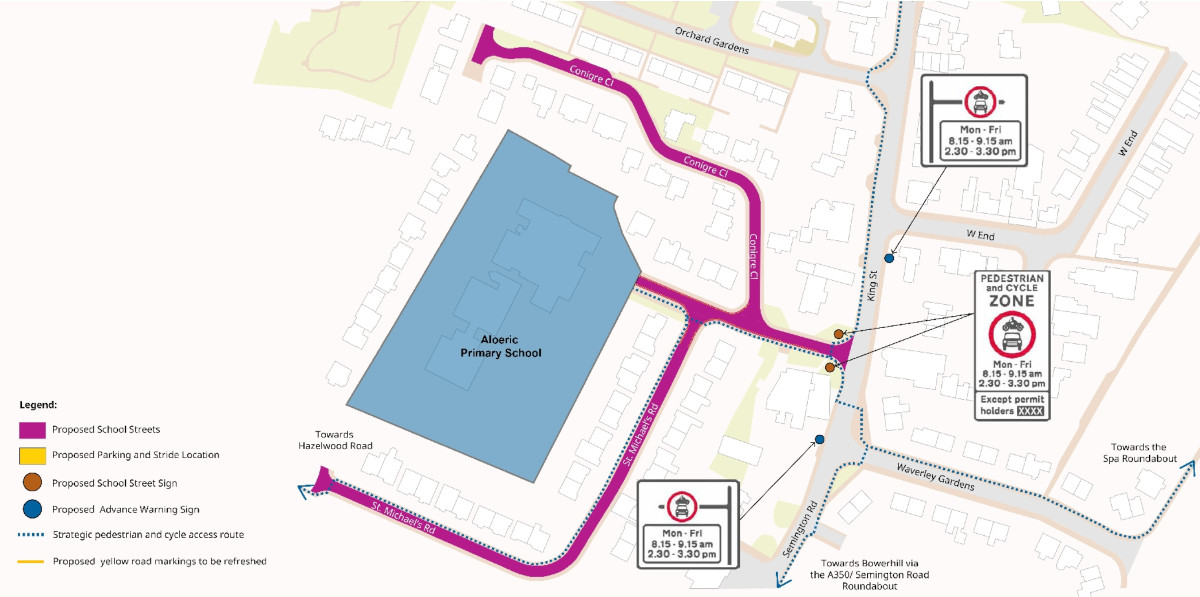 The Melksham News today highlights the School Streets Scheme that's coming into force for an 18 month trial, and the previous edition included a very wordy legal advert from Wiltshire Council listing new parking / yellow lines restrictions in and near the vicinity. The article is at https://www.wiltshire.gov.uk/school-streets
There has been, undoubtedly, a congestion, driving and parking issue around the Aloeric school for many years. The school predates the age when a high proportion of parents drove their children to school, and indeed these days parent can choose a school for which the only practicl access from their home is by private car. Which makes for a bit of a problem that the school was never designed to cope with.
I wish the initiative well; whilst I worry about a number of issues, something really needed to be done. Lots of cars manouvering around and lots of children and parents on foot weaving in and out of them is a recipe for a serious accident, and I can't see myself any better solution - I can't ask "why don't you xxxx?". But I worry about people accessing the vets and pub businesses there, and carrier deliveries. I worry about the zone and the yellow lines simply moving the cars and congestion into neighbouring streets. I worry about the cost and paperwork of setting up and monitoring all the various exemptions. And I worry about parents feeling a little miffed and picked on when they seem to be just about the only group which is NOT exempt. Fingers crossed that it will work.
The problem in not unique to the Aloeric School - the streets around Melksham Oak are also a sea of parked parents in the afternoon as they wait to collect their children. For the senior school, walking, cycling, public transport options may be there and could - I'm sure - be improved; there has been progress on that, but it can get worse as well as better as Melksham grows. Good to see plans for new housing, as they are approved, include public transport / bus provision, and it will make sense for school time journeys to run via Melksham Oak like the x34 does already.
Carrots not sticks are needed. The current solution feels too much like a stick. And there are potential carrots around. Better paths and school access to Hazelwood Road, and via Orchard Gardens to cut down on driving. An agreement with the pub to let their car park be used for pickups / drop offs at what's a quiet time of day in the pub trade. Perhaps a tuning of the x34 and local bus, though that limited resource is perhaps bette used at The Oak.
Published Wednesday, 26th August 2026
I'm a "Digital Creator" - what does that mean?
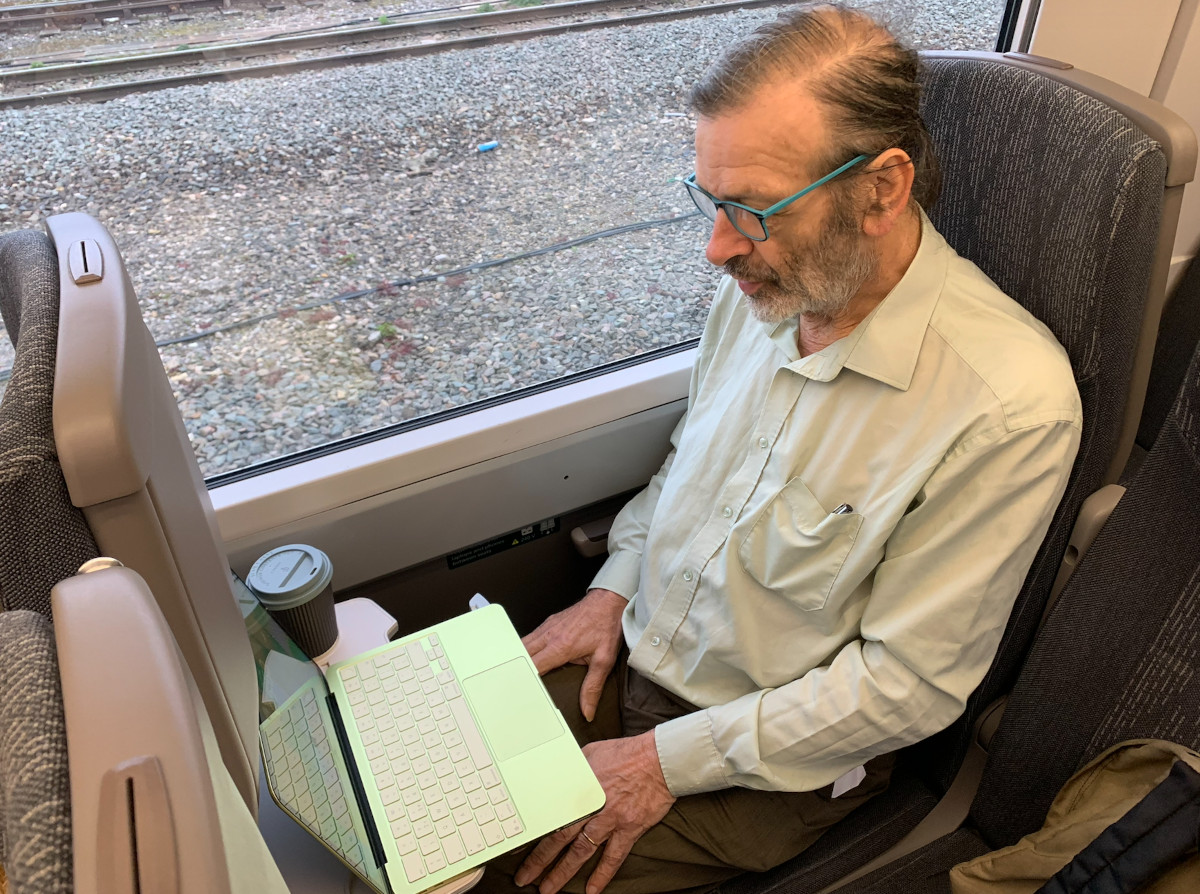 Graham Ellis - on Facebook
Public transport advocate and campaigner, retired IT trainer, retired hotelier and retired Town Councillor
Digital Creator * Melksham * The City University
Facebook describes me as a "Digital Creator". What does that mean?
On Facebook, a digital creator label on a profile means the user has Professional Mode turned on, which is a setting that helps people build a public presence and access performance analytics.
What the Label Indicates
Professional Mode Active: Facebook often enables this category automatically or prompts users to turn it on when they share public videos, Reels, or get a larger following.
Public Content: Profiles with this tag are set up to reach people outside their immediate circle of friends, pushing posts into wider feeds.
Access to Tools: It unlocks dashboard insights, follower data, and potential monetization features (though having the label does not mean the user is actively earning money or is a professional).
Common Misconceptions
Not Always Intentional: Many users report that Facebook assigned the "digital creator" title to their personal profile automatically without them asking for it.
Not Necessarily an Influencer: While some use it to build a brand or share original art, videos, and blogs, others are just regular users whose accounts defaulted to this setting.
And what does Google tell me?
What Digital Creators Do
Content Production: Research, write, film, and edit multimedia assets for platforms like YouTube, TikTok, or blogs.
Community Building: Interact with followers through comments, direct messages, and dedicated community spaces.
Business Operations: Manage publishing schedules, analyze performance metrics, and handle contracts
What do I make of that?
* I am happy with the Facebook "Digital Creator" label though it is not something I actively sought.
* I am happy with a wider readership that just my friends - much of what I write is potentially useful to others, especially some of the niche stuff that may come up in searches, and things I write and tag as public are thought through with that being considered. As I share widely, I am very much aware to respect the privacy of family, friends, and others, and issues such as copyright and the various safety-on-line and laws on permissable content.
* The insights tools and follower data are useful to me in helping provide feedback - telling me which posts gain tractions and which are whistling in the wind, for example. It's also useful to see things like the age mixes on popular posts. There is not necessarily a correlation between the number of reads, the number of likes, and the number of comments and helping to understand which posts are seen and read, but not generating a response, is useful. Long factual posts often get well read, but the "likes" come on short follow up comments that highlight one particular aspect.
Published Tuesday, 25th August 2026
Road works and bus services around them
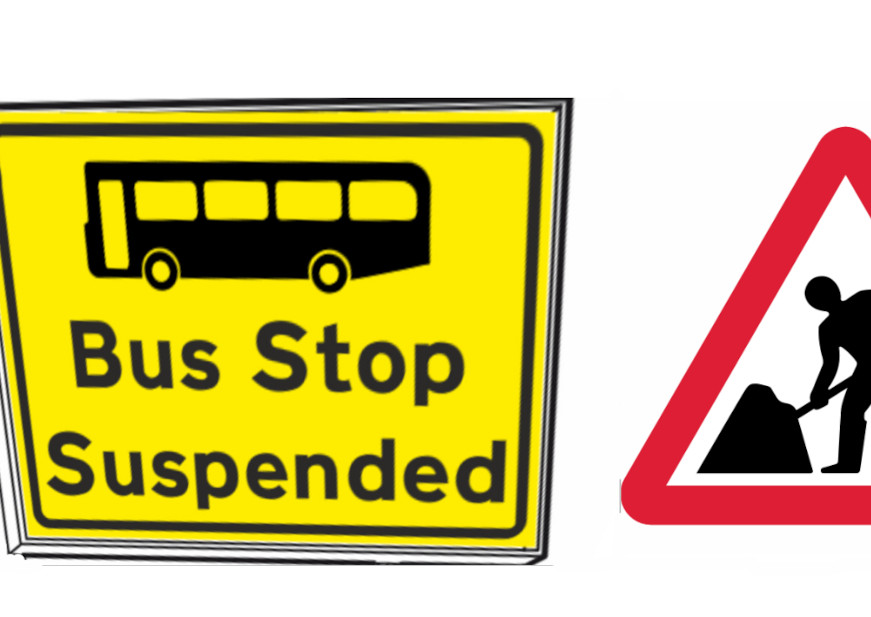
Road work season!
* The 271 and 273 (and once-a-day 272 diversion) are skipping Whitley for a period of up to six weeks. The Zigzag (69 with an occasional 68) provides a much-reduced service through Whitley, with a need to change in Atworh if you're headed to or from Bath.
* The 271/2/3 are terminating early in Bath / outbound from the Guildhall until November - not serving the Railway Station on Manvers Street or the Bus Station. If you're headed to / from a change in Bath (trains, other buses, RUH) you'll probably want to walk across the city. A few routes (13, 228) are continuing to the bus station but they are sparse, and if you're going to the RUH the x76 - one service, Monday to Friday only, may work for you if you are lucky.
* The x34 soutbound out of Melksham toward Trowbridge is being diverted away from Semington Road past Berryfield for three weeks, resuming its normal route at the Police Station. Northbound buses are NOT diverted. Official recommendation is for returing home is to catch the bus to the police station and double back, but that can involve a long wait - especially at the weekend. The 12:08 bus on route 15 (Monday to Saturday) DOES still serve Berryfield, diverted in via the Police Station.
Oh dear! The buses are so important to many people who don't have the mobility to walk up to a mile to an alternative stop - that's why a lot of people use the bus - a necessity.
The bus operators, and to some extent the local authorities, are at the mercy of the utilities who - with certain notice - can dig up the roads as necessary. The utilities are - as I understand it - oblidged to provide car and business access to places within the work area, with an allowance made for them to delay traffic / divert it around if they have to. They are not obidged to provide access to buses that would normally pass through. The bus operators cannot divert their buses up to each end of the works - nowhere to turn around, and the timetable would go to pot for everyone. The Unitary Council, who are the local transport authority here, don't have the budget to buy in an extra service / vehicle to fill in the gaps. So no-one has the tools or structure to do much.
Local co-ordination - and Melksham Without are active in promoting this - may bring some compromises such as extra temporary bus stops, working with Wiltshire Council. But, sadly, there's no magic wand here and we / you have to make do as best you can with an inferior service - perhaps impractically inferior - during the works. This can (we know) put an extra load onto the Community Bus team, Link services to help people get to hospital, etc. Many people in the various organisations DO do their best to help, but there is no ideal solution and perhaps systemic change might be requires? There is certainly a balancing act between keeping the roads open and the safety of the workforce.
Published Monday, 17th August 2026